Teen Farm Fellows at Cobb Hill
Drake is a Senior at Hanover High School. In his free time, he enjoys exercising and spending time with his dog.
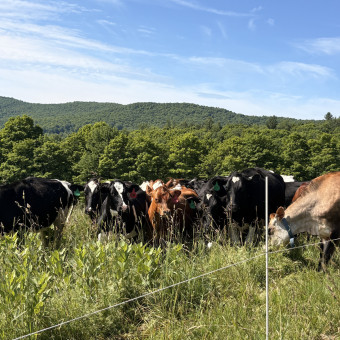
It was an hour and a minute drive to a dairy farm called Cobb Hill Cheese. Ava, one of the farm workers, gave us a tour.
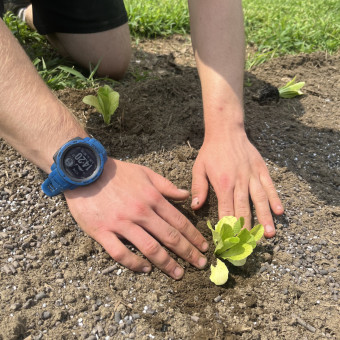
First they led us through their barn, which is used for milking and processing milk. The walls were dirty and painted white, and the floors were covered with hay. Cow pens were lining the walls, some of which held cows. As we were walking through, our tour guide informed us that they have a pregnant cow who was going to give birth soon. On our way out of the barn, we were given spades to dig with and were soon after put to work planting brussel sprouts in one of their irrigated greenhouses. It was a hot day, and we were sweating heavily by the time we emerged from the greenhouse. Luckily, they set us to planting some flowers outside as our next task, namely marigolds, sunflowers, and zinnias.
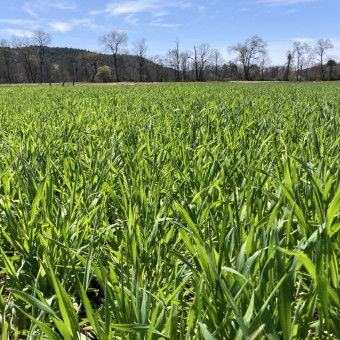
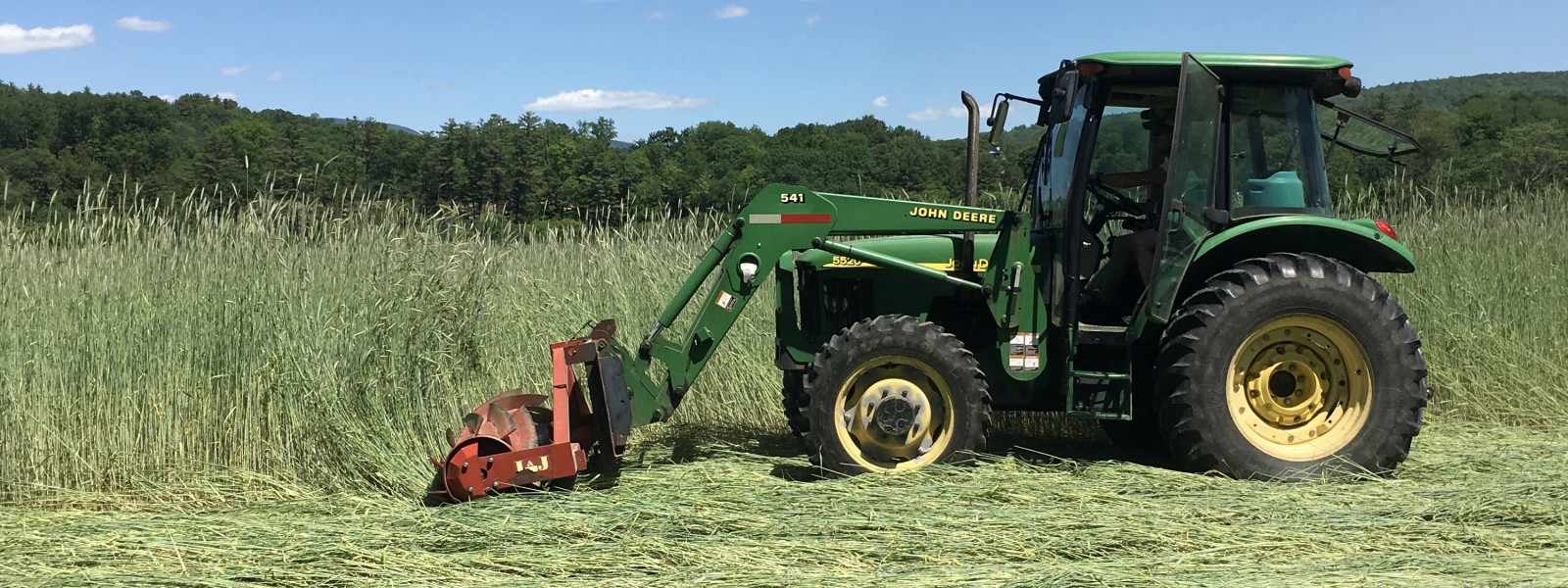
Next, one of the lead farmers showed us some of their horses who were grazing in an enclosed area and feeding on hay. He brought us around back to show us their razor crimper, a machine that is used in no-till farming to kill the six feet tall rye to prepare the bed for planting. The razor crimper is a wheel with sharp blades that is pulled through the rye to crack the weakened stalks. The stalks become weakened before they go to seed, so this process is only possible at this time in the rye's growth cycle. The razor crimper, however, is not a silver bullet; it only kills about eighty percent of the rye from the bed, so tarping is needed to fully prepare the bed for planting. After explaining all of this to us, and showing the old rusted razor crimper that they used to use and the newer one that they currently use, he walked us over to their garden beds and asked us to remove his tarps from his garden beds.
_1200_761_90.jpg)
This whole process brings about a question: why do all of this work instead of just tilling the soil? The reason for this lies out of the ability of our eyes in the microscopic fungal communities beneath the surface. Fungal communities provide a vital function for the growing of crops; they break down organic material for the plant to absorb and use. What happens when we till the soil is that the fungal communities are disrupted and cannot provide our plants with as much nutrients as they need to grow big and strong. Along with the disruption of these microorganisms, some of the carbon in the soil escapes during the process, leaving less carbon for the plants to absorb for themselves. No-till is the solution to this problem because it breaks up soil for us to plant in it and preserves carbon and carbon producers in soil, so many farms have been attempting to incorporate it into their farming practices.
After aiding their no-till garden, we went into the farm to see the classifications of eight cows and how they milk them. To classify a cow, a classifier examines them for specific, desirable, cow features. The classifier later assigns a score based on how the cow scored on a scale of 100. The higher the score, the more the cow is worth. Our hosts explained that it is extremely difficult to get a perfect scoring cow and began preparing the cows for milking. First, they cleaned the udders, then dabbed the cow with a brown, sticky substance, and finally, attached a pump device to all of the udders. The milking process was surprisingly slow at first, but our hosts told us that it was normal and that the milk would eventually come out quicker later on.
With our trip almost at an end, we went to see the cheeses for which the farm is named after. Gloves were hanging from the wall for handling the cheeses, and nobody was allowed to enter the cheese room, but we did get to see inside of it. It had racks and racks of cheese wheels, and was the size of an average college dorm room (15ft by 10 ft), as far as we could see. Then, Ava brought us to their refrigerator, which was near their farmstand, and gave us a slice of their cheese! After saying our goodbyes, we left for Cedar Circle Farm and shared the cheese and some of what we learned with our fellow workers. And they ate and loved the cheese.