Hall Apiaries: Understanding the flow of bee farming
Rowan Cary (he/him) plays soccer or tennis, sails, and eats his favorite vegetables during the summer: peppers, asparagus, and potatoes.
Aidan Milone (he/him) enjoys swimming, biking, and traveling during the summer, and his favorite veggies are potatoes and cucumbers.
One beautiful Tuesday afternoon, the Teen Farm Fellows journeyed south to Hall Apiaries. After Apple Maps led us astray, we were finally able to make it down the hill and into the field where the bees are kept. We were met by the owner, Troy Hall, and an employee named Ray. They introduced themselves and explained their objective for the day. They were examining each frame from its hive and searching meticulously for the queen bee in that section.
Before taking us into the field, they took a brief break for a bite to eat and to provide an overview of Hall Apiaries and its history. Hall Apiaries, as they explained to us, is a small-scale, local, and natural bee farm. They have multiple sites in the Upper Valley where they breed and sell bees, harvest honey, and extract beeswax.
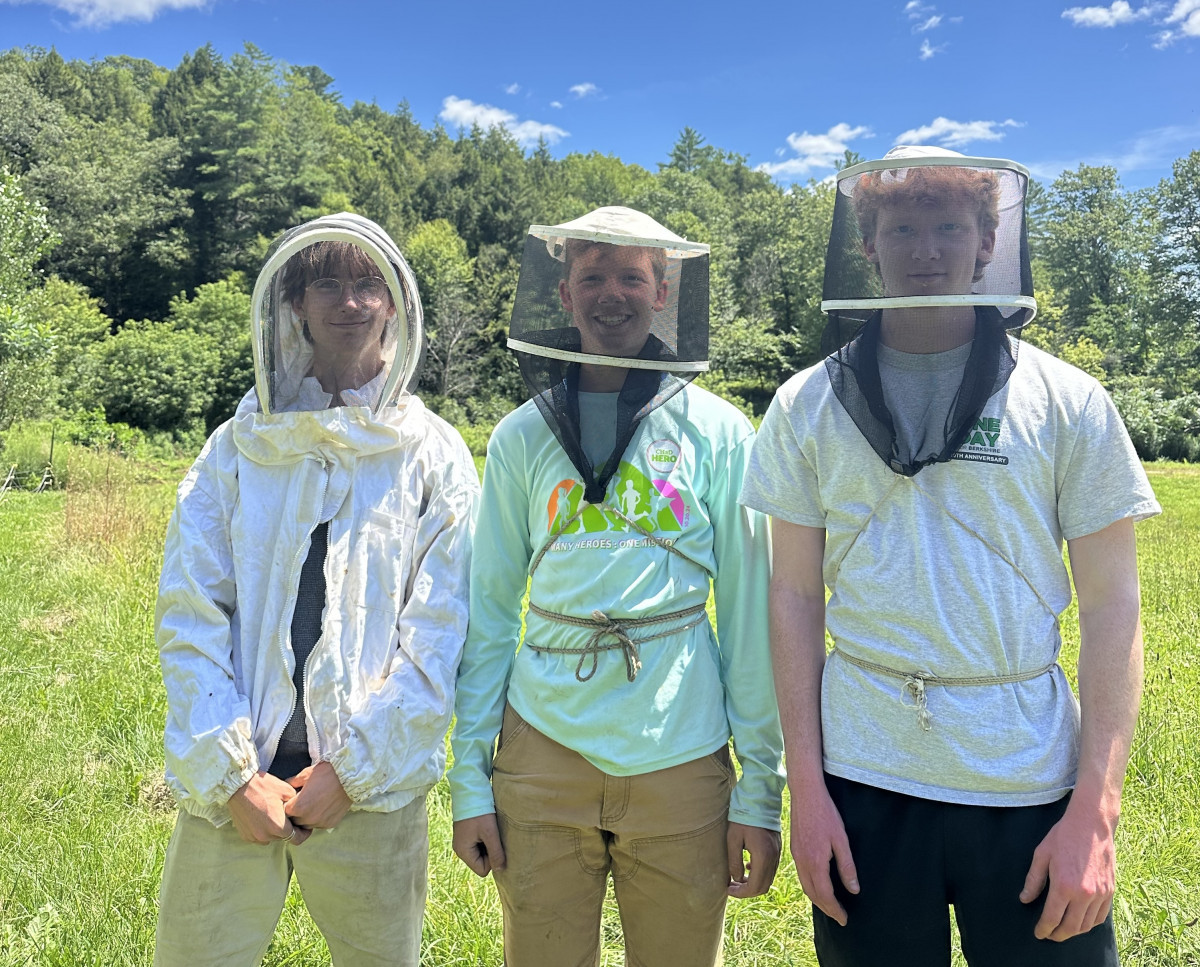
After lunch, we were provided with the proper protection, which included hoods with netting, to enter the fenced-in area of the field where the beehives were located. Troy took us over to one of the hives that they were working on. He demonstrated the technique he used to slowly remove each frame without angering any of the bees inside. Additionally, he used a tool called the “hive smoker” that could blow small amounts of smoke into the hive to calm the bees. After removing the frame, he looked closely to see if he could spot any eggs, which were a tell-tale sign of a queen bee. If he found a queen, he would remove it with his bare hands and place it into a small tube along with seven worker bees. After demonstrating this process to us a few times, he allowed us to help out. After taking the next few frames out, he handed them to us so we could search for the queen bees ourselves. Although finding the queen bee amongst the swarm of workers and drones was quite challenging, we eventually got the hang of it and made our way through about three or four hives by the end of the day, along with one or two bee stings.
This experience was both exciting and meaningful, offering us the opportunity to witness one of the most unique forms of farming in the Upper Valley, and providing an inside look at the processes behind bee farming and honey production. None of us had any prior experience with this sort of farming, so everything we learned there was new and fascinating.