PYO flower garden in full bloom!
...time to sign up for fall CSA
...delicious heirloom tomatoes
![]()
Cedar Circle Farm & Education Center is a certified organic farm on conserved land along the Connecticut River in East Thetford, Vermont, just minutes from Norwich, Vermont, and Hanover, New Hampshire. Farmstand and Hello Café are open May-October.
We’re Open! 10-6, Sun 10-5. Hello Café, daily 8-5.
With a farmstand, CSA (a few Fall CSA openings still available!), and internet Hello Café, we also offer guided farm tours and activities, gardening and cooking classes, harvest festivals, and Dinners in the Field.
Farm tours are available year-round by appointment.
-
Fresh from the Field
Farm-grown produce in the farmstand now…
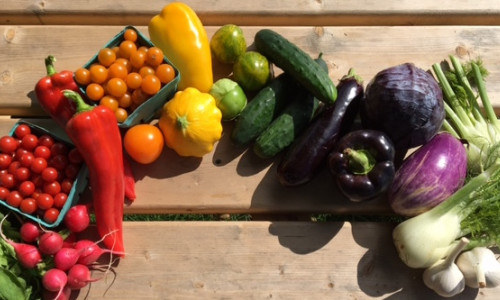
Sweet corn, cantaloupe, watermelon, field and heirloom tomatoes, fresh herbs, beets, cabbage, carrots, cucumbers, eggplant, garlic, kale, lettuce, hot peppers, sweet peppers, new potatoes, salad mix, and swiss chard. Big sale for canning, sauces, salsa, or freezing: tomatoes, $2/lb for 10 lbs. or more! -
Pick Your Own
You-Pick Blueberries CLOSED
We are done for the season! Thanks for your business and enjoy all the berries you saved up for winter!
-
Farmstand and coffeehouse
Farmstand: Mon-Sat, 10-6; Sun, 10-5
Coffee shop: daily, 8-5
Farmstand Field-fresh organic veggies and fruits, see above for what’s in now.
Groceries: Our own eggs! Our own fresh-baked goods! Local milk, yogurt, ice cream, cheeses; regional maple syrup, honey, artisanal cider vinegar, chips, salsa, pasta, flatbread; organic fruits, almonds, dried beans. We are now the only Upper Valley outlet for Trukenbrod Bread!
Local meat: whole chickens, sausages from Hogwash Farm, Norwich
For your garden: a beautiful selection of organic annuals and perennials (both 50% off), tools, seeds, fertilizers, pottery.
Hello Café Organic fair-trade coffee, farm-baked goods, wireless internet! -
Education Center
Beyond growing wonderful organic vegetables and making them available to our neighbors, we are committed to raising public awareness about the importance of local organic agriculture and other educational goals. We offer a variety of educational programs:
Classes in gardening and cooking, Dinners in the Field, a Tomato Tasting, and harvest festivals.
You can take a self-guided tour of the farm or arrange for .(JavaScript must be enabled to view this email address) year-round for individuals and school groups.
Want to learn more about our education goals? -
CSA: Share the harvest!
2010: Our 7th year of CSA!
Community-supported agriculture: a partnership between neighbors and farmers to share the bounty and risks of farming. Receive weekly baskets of organic vegetables, berries, flowers.Members: sign up for weekly emails with farm news and what’s in the basket by .(JavaScript must be enabled to view this email address).
-
Pumpkin Festival!
Sunday, October 10, 2010 ... 10 am-4 pm
Lots of family fun and free activities!
Our 8th Annual Pumpkin Festival includes children’s crafts, face painting, pumpkin picking, live music, horse-drawn wagon rides, educational displays, cider pressing, self-guided farm tour, farm-made food concessions, fresh salads, organic local ice cream, NOFA-VT‘s wood-fired pizza oven, and more!
More information here...
Latest updates
-
[farm workshop] Practices to Promote Fresh Produce Food Safety for Direct Markets
Cedar Circle Farm & Education Center is hosting a NOFA-VT farmers’ workshop on September 8, from 5 to 7pm:
This twilight workshop with Vern Grubinger of UVM Extension and Dave Rogers of NOFA-VT will focus on key information and practical steps to improve food safety-related practices for vegetable growers and orchardists who are not seeking or contemplating GAP (Good Agricultural Practices) certification.A farm and facilities tour will focus on identification of critical food safety control points, exemplary practices, and practical improvement strategies. Developments in food safety legislation and regulation will be covered.
Cost: Free for VOF farmers and VVBGA members, $10 for NOFA-VT members, $15 non-members. Preregistration not required. .(JavaScript must be enabled to view this email address)for more info, 434-4122.
-
Silenced Voices — an important new film, showing on the farm, August 13, 6 pm
Vermont Migrant Farmworker Solidarity Project shows their new important documentary film Silenced Voices on Friday, August 13, 6 pm here at Cedar Circle Farm & Education Center. Come early & explore the farm teaching gardens & self-guided farm tour. Shop at the farmstand and enjoy an iced coffee at cafe open until 6 pm. The film will be followed by a discussion and dialogue with the Vermont Migrant Farmworker Solidarity Project and filmmakers.
About Silenced Voices
Migrant Farmworker José Obeth Santiz Cruz was killed in a farming accident last December in Vermont. The Vermont Migrant Farmworker Solidarity Project sent a delegation to Mexico to return his remains and document his family and community coming to terms with his death, sharing stories about the causes, effects, and their experiences of migration. Their stories draw attention to the conditions and economic policies that force migrants from their homes in Mexico and suggest a need for a new dialogue about the root causes of migration. Produced and directed by Gustavo Terán, Brendan O’Neill, and Sam Mayfield for the Vermont Migrant Farmworker Solidarity Project. -
A New Works Project Administration
Farm co-manager Will Allen has coauthored a piece with the Organic Consumers Association. Here’s an excerpt:
A modern day Works Project Administration could train and employ a massive green corps to create the green infrastructure and post-carbon economy. When FDR created the Works Project Administration in the 1930s there were about 60,000,000 workers in the labor market. Twenty-five percent, or 15,000,000 people were unemployed. Today, there are 154,400,000 workers in the labor market. The Labor Department estimates that 10.3% of the population is unemployed. Most analysts argue that the percentage is closer to 16.5%. Whoever is right, and whether it is 15.9 million or 24.7 million, more people are out of work now than during the Great Depression. And they desperately need jobs and training, just like people did during the Depression.
Environmentalist Bill McKibben is right, we need to mobilize a grassroots army to demand reductions in emissions and armies of workers to convert our infrastructure to a green economy. That means you must text, twitter, e-mail, and use FaceBook, Google, YouTube and other resources to get educated about climate change. Once you understand the gravity of the situation you will be able to change your habits, inform your friends, and participate in climate change demonstrations. Get organized at the local level and then coordinate your local efforts with nationwide networks such as the Organic Consumers Association and www.350.org.
Your children and grandchildren are depending on you to make their world livable. The hour is late.
-
Agriculture on the national level
Mark Bittman, a food writer we like, posted an important update to national-level food issues yesterday. Bittman is the author of Food Matters, which he describes this way:
a look at the links among eating too much meat, obesity, global warming, and other nasty features of modern life. (It has good recipes, too.)
If you’re following this stuff, check out the post:
Big Ag’s Big Pal in the Oval Office
Even as a journalist following food and politics, I have trouble keeping up with the revolving door between the Obama administration and the corner offices of huge agrichemical and GMO seed producers like Monsanto and DuPont. The latest announcement to catch me by surprise is that Romona Romero, a DuPont corporate lawyer, has just been nominated by the president to the post of General Counsel for the U.S. Department of Agriculture. [read more]
-
How to avoid late blight in 2010
The movie barn at the farm was packed on May 13, 2010, by local gardeners and concerned citizens who came to see a slideshow and discussion with Anne Hazelrigg, plant and disease specialist from the extension service at UVM. If you weren’t able to join us, here’s a summary of her talk on this important topic:
2009 was the perfect storm for late blight. In order for late blight to affect us so early again in the northeast, we would have to have more cool and moist weather, a host (solanacea crops), and both part A and part B of the sporangia.
Late blight need living tissue to survive tthe winter. Most likely that would be unharvested potatoes from last season which were infected with the blight spores. Late blight spores cannot survive on tomato seed. No need to worry about volunteer tomatoes.
Don’t plant home-saved potato seed this year.
Do buy certified seed potatoes; for example, from: Fedco Seeds, Moose Tubers, Johnny’s Select.
Rotate your crops. Don’t plant potatoes or tomatoes where either of them grew last year.
Scout last year’s potato crops often for volunteers that were left in the ground. Remove them.
Buy locally grown tomato starts.
Buy late blight-resistant tomatoes (for a list of varieties, visit this online tool from UVM, http://www.uvm.edu/mastergardener/)
If you suspect you have found late blight, call 800-639-2230. Suspected plant samples can be put in a plastic bag and mailed to:
Plant Diagnostic Clinic
63 Carrigan Dr. Geoffords Halls
Burlington, VT 05405We’ll all benefit from all of our efforts to prevent a repeat of the 2009 season, thanks!
- More news…